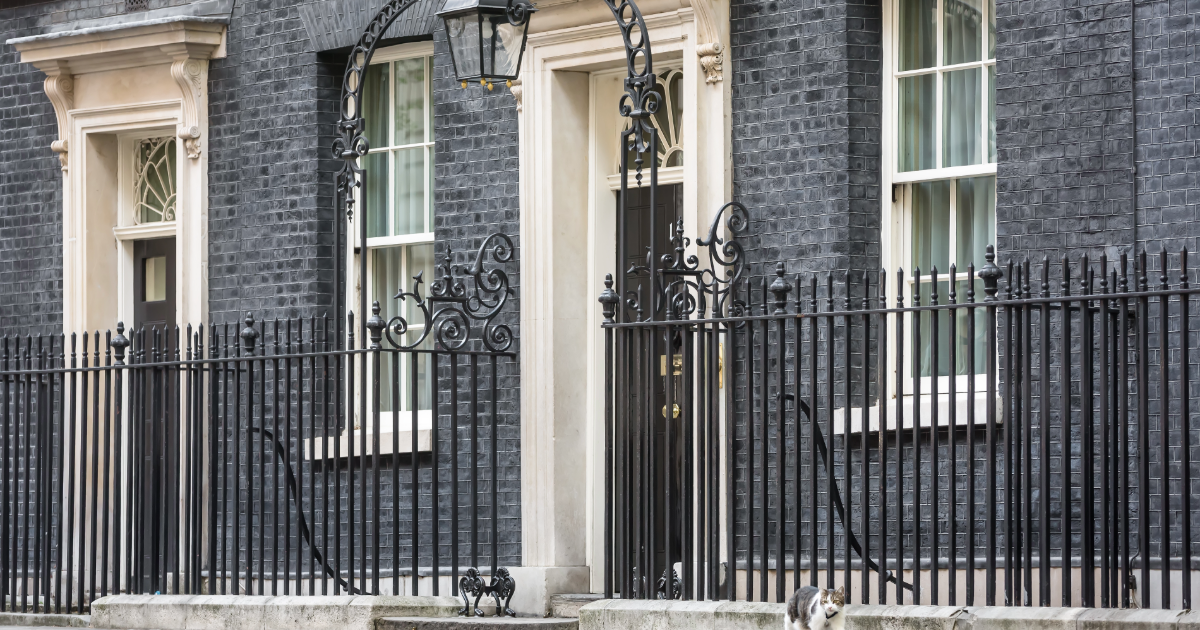
When I was studying for my English A level, we often used the term ‘synecdoche’. Synecdoche is where part of something is used to refer to the whole. For example, referring to the British government as ‘Number 10’. But with Burnham’s plans, that might soon cease to be the case.
What we know
It’s been reported that Burnham is looking to move the government further away from Westminster with a Prime Ministerial office potentially planned to be positioned in Manchester. This comes as no shock as Burnham, the so-called ‘King of the North’ has, to his credit, often put place before politics, especially as the Greater Manchester Mayor. But just because something isn’t a shock doesn’t necessarily mean it is a good thing.
It’s not a new thing to be moving parts of the government away from Westminster. In fact the last Tory government did it. With offices popping up across the country. But there was one crucial difference, the PM’s office remained in Westminster.
What does Burnham seek to achieve?
Well, we know empirically that Burnham loves to champion the north. For Burnham this opportunity doesn’t only help garner public support from northern voters, who’ve too often felt alienated by Westminster and London-centric governance, but it also poses an opportunity to build on his brand as the ‘King of the North’.
But there is probably a personal element to it too. Across the world, a lot of leaders have offices outside of their official office/residence. Whether that be Vladimir Putin’s Bocharov Ruchey or Trump’s Mar-a-Lago. These retreats offer leaders a space where they can be comfortable whilst continuing to govern. But, here, there must be one criticism, the PM already has Chequers, why is yet another site necessary?
Criticism 1: Finances
There are three core arguments when it comes to the finances of a new site for the PM. Firstly, will the site be paid for by the taxpayer? This is a large criticism, the taxpayer already has to pay for the maintenance costs on Chequers and Downing Street. Is it really worth the tax payer paying yet more money to pay for a vanity project? Probably not. The return on investment of such a change would be negligible if not negative.
Then there is the security costs. Anywhere where the Prime Minister could be at risk requires the utmost levels of security, that is a given. But these security measures don’t come cheap. When we have dwindling police numbers, yet higher rates of crime – it becomes hard to justify more police resources being drained by the state for what, again, can only be described as a vanity project.
Travel doesn’t come cheap either. Yet another thing I imagine the taxpayer will be expected to foot the bill for. It is, again, hard to justify the taxpayer paying this completely unnecessary expense just so the PM can have another place that he wants to go to.
The finances simply do not stack up. It’s costly and has a low return on investment. When the country is already struggling financially, the optics of a Prime Minister having a third retreat to go to won’t appeal to a lot of voters, especially those outside of Manchester.
Criticism 2: Westminster Irrelevance and Accountability
One of the best parts of the British system of governance is the accountability it allows. The PM and their government is scrutinised by the mother of all parliaments all the while. Being in Downing Street is an almost symbolic thing. The PM is just down the road, if Parliament wants a word with the PM, it can summon them.
And the architecture around Westminster oozes a sense of power and importance. You walk down Whitehall, you see the buildings towering over you, you see the police, you see the guards on their horses and immediately know you are in the heart of where important decisions are made – and that is the beauty of it. If the PM is gone, this sense of importance could quite easily diminish.
And on an international scale, that synecdoche I mentioned earlier is actually quite important to maintain relevance. The phrase ‘Number 10 said…’ or ‘Downing Street stated’ or ‘sources in Westminster’ carry weight. A lot more weight than ‘sources in Salford have said…’ does (apologies if you’re from Salford, it’s nothing personal; it’s just not the same really is it?)
Criticism 3: Why does Manchester get special treatment
I know. I know. Andy Burnham is from Manchester, he is the so-called ‘King of the North’ – but there is a very real point here. We have Scotland, who have had an independence referendum, we have Cornwall, where people too feel overlooked, yet, Burnham focuses on Manchester? I just think if we want a real return on investment here, the focus should be on making those communities who feel underrepresented in government, feel more represented. People in Manchester will know Burnham will look out for them – what about those who don’t feel that way?
This is nothing critical about Manchester. In fact, I love the city. It is vibrant and full of great people. But when it comes to governance, it simply doesn’t compare with our capital. Neither does Birmingham and neither does Newcastle or any other city in that way.
Better options
Well the alternatives are obvious in the days of remote working. Hire more people from outside of London in the government. Although I am not a fan of work-from-home culture. I think it is a good compromise if Burnham is so insistent on expanding government operations outside of Westminster. Because Westminster’s prestige is one of the most powerful tools remaining in Britain’s arsenal.