As a lot of people who know me are aware, I am an incredibly busy person with a variety of interests. Two of which being economics and DJing. Like many of you reading this who are also interested in the field of economics, you’ll know that you can very easily fall down a rabbit hole of applying economic logic and theory to much of what you do. Having worked with a range of venues in a variety of areas, the issue of residential developments in areas where late-night venues once thrived has been an issue that’s plagued the night time economy up and down the country.
An issue not confined to Birmingham
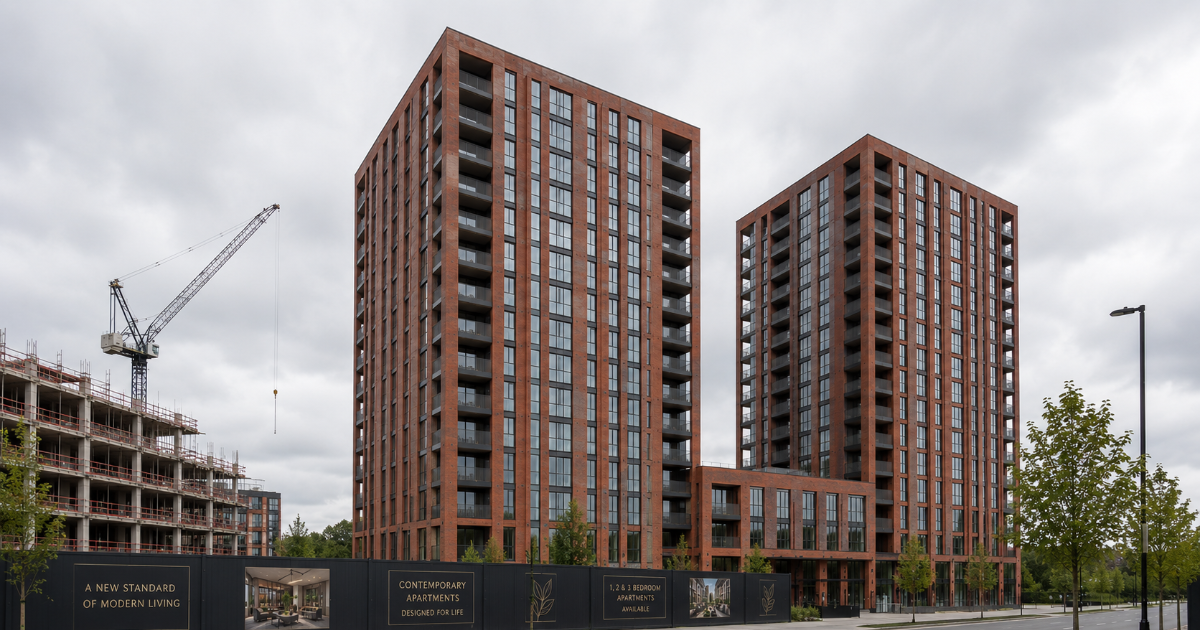
Across the country, lots of late-night venues are finding themselves facing the same issue: residential developments. They’re popping up in city centres and putting late night venues which have operated in those areas for decades at risk – mainly due to noise and anti-social behaviour. In economic terms, these two things would certainly constitute externalities. They are, afterall, external costs (or benefits depending on who you ask) which are imposed on third parties to the economic transactions taking place at late-night venues.
It should be noted that in this blog, I am simplifying the externalities, negative and positive, into sections to make the blog structurally easier to follow. In reality, these externalities should be considered from a more holistic view in order to compare the benefits and costs incurred on society to determine whether the output of a nightlife venue is socially optimal.
Noise and nearby residents
Noise is one of the major externalities here. What complicates the economic perspective of this issue more is the ability of noise to create both positive and negative externalities upon different members of local communities simultaneously. Take a music festival for example. One household may complain that the persistent noise from the loud music at the festival disturbs them and is therefore an external cost imposed upon them. Meanwhile, their neighbours may sit out in their front garden with a picnic blanket enjoying the music – a benefit to the third party and therefore a positive externality. This degree of subjectivity creates challenges for welfare economists attempting to quantify the social costs and benefits of such activities. To determine whether the festival is operating at a socially efficient level, policymakers would need to evaluate the relationship between marginal social benefits (MSB) and marginal social costs (MSC). This same logic could be applied to late-night venues.
However, there must be a clear distinction. A festival only lasts a few days. If those same people who sat out in their garden and enjoyed the music of the festival were forced to listen to that music day-in and day-out, the perceived benefit from the festival would likely diminish whilst the nuisance experienced by others could become more severe. That would mean that the MSC could exceed the MSB. In welfare economics, this would imply that the festival is operating beyond its socially optimal level of output, as the marginal social cost of an additional unit of activity would exceed its marginal social benefit. In this case, the unit could, for example, be an additional day of music.
But how does the noise externality play out in terms of late-night venues – which may be permanent? Well, this means that the nuisance caused by the noise, a negative externality which increases the marginal social cost, risks increasing over time and exceeding the marginal social benefits applied to residents locally. In this context, an additional unit of output could be thought of as another night of operation, an extension of opening hours, or an increase in customer capacity. This is the key indicator that many councils seem to consider. But this is wrong. Let me explain why.
Wider social and private benefits
In welfare economics, we work to find the optimal level of production, which is where the marginal social benefit equals the marginal social cost. But the marginal social benefit is the sum of both the marginal external benefit (like that incurred by residents enjoying the music of the music festival) and the marginal private benefit (the benefit experienced by those who are parties to the economic activities of the club e.g. the shareholders, management and even customers). This means that where the marginal private benefit is higher, with the marginal external benefit held constant, the overall marginal social benefit would be higher. This therefore increases the point at which the marginal social cost and marginal social benefit would be in equilibrium, thus a greater marginal social cost would be more worthwhile.
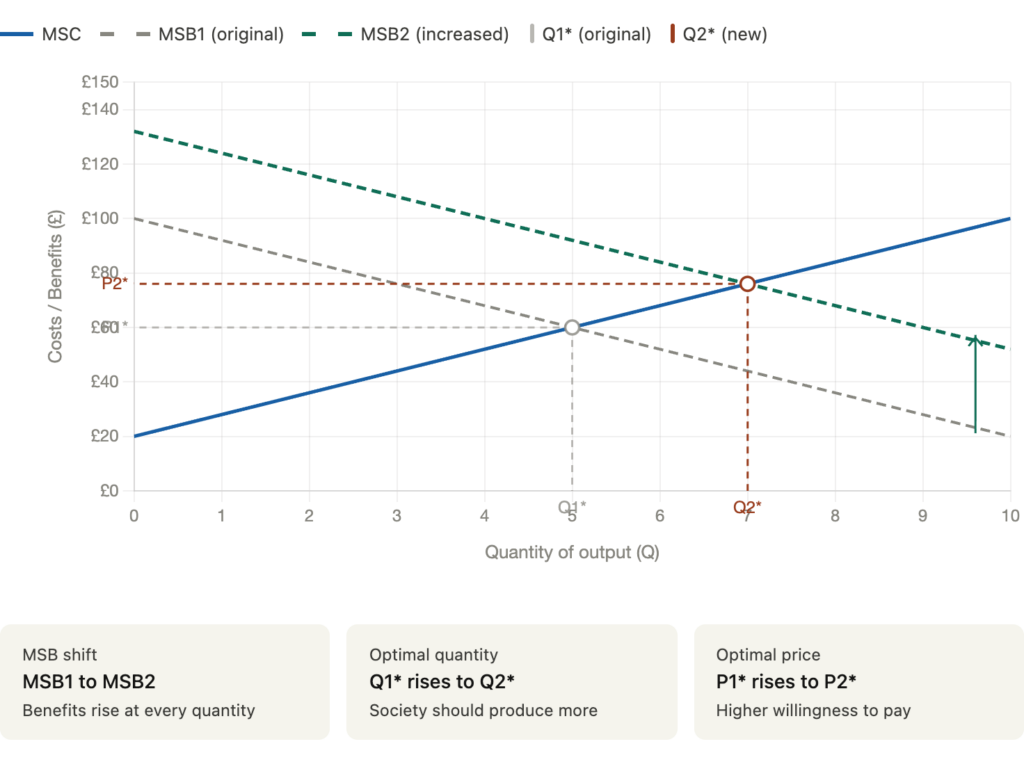
The social benefits more widely should be considered too. A successful night-life venue brings tourism, culture and a myriad of other benefits with it. These benefits should also be included in any calculation attempting to find the socially optimal level of output. By increasing the marginal external benefits, the marginal social benefits are increased to a large degree too. Take, for instance, the ‘spillover’ effects generated by a strong night-time economy. People book taxis, go to restaurants before going out, book hotels and boost overall footfall. A decrease in late-night venues and/or additional licensing restrictions on operating hours etc. would have an impact on the extent to which these spillover effects create external benefits and add value to the overall economy. Increasing output of a venue in this regard, could increase the external benefits and thus the overall social benefit of the increased output.
Another consideration, however, must be that for this to be considered an efficient level of output – the venue should bear the full social costs of its activities, this means internalising the negative externalities created by the noise. This could take the form of purchasing soundproofing or negotiating payments to those who experience the noise nuisance through a more Coasian approach. Though some may argue that reducing the licensing hours of a late-night venue could also act to internalise the externality by reducing the nuisance at times of day where the disutility caused by noise is at its greatest. However, such an approach would reduce the private benefits enjoyed by both the venue and its customers. Whether this is socially optimal depends on whether the reduction in social costs outweighs the loss of private and external benefits. This approach of smaller operating windows set out by strict licensing restrictions is something which has put significant strain on late-night venues and led to closures.
“Agent of Change” principle
Many late night venues also existed well before developments were ever proposed. From an economic perspective, the developers moving into an area with late-night venues should not only consider the impact of those venues on potential developments, but should be responsible for mitigating noise issues in the venue’s design. It could even be argued that the developers are creating a negative externality by generating conflict between existing venues and new residents. Under the Agent of Change principle, the responsibility for mitigating these effects should land upon those proposing the change of land use, and therefore the developers. This would from an economic perspective demonstrate the developers attempting to internalise the externality rather than imposing external costs solely upon venues which have been located in the area for decades.
What can be done?
Economically, to settle this issue, we’re trying to ensure that the marginal social costs equal the marginal social benefits. There is no doubt that both residential developments and late-night venues impose positive and negative externalities. It’s my belief that planning policy must adopt a welfare economics view when dealing with this issue.
Coasian bargaining can be a great step in the right direction. If late-night venues and residential developments worked together to internalise externalities imposed by both parties, it could help move to a socially optimal level of output from late-night venues whilst not imposing negative externalities such as noise nuisance on new residents to the area. For example, developers pay for soundproofing in clubs if they wish to build apartments in an area with a significant night-time economy.
Rather than viewing night-life and residential development as inherently incompatible with one-another, policy-makers (and the market) should focus on mechanisms that preserve the economic, cultural and social benefits of late night venues whilst ensuring that the costs on third parties are properly accounted for. By doing so, it may be possible to finally strike the correct balance between a thriving night-time economy and the urban development which policy-markers often strive for.